
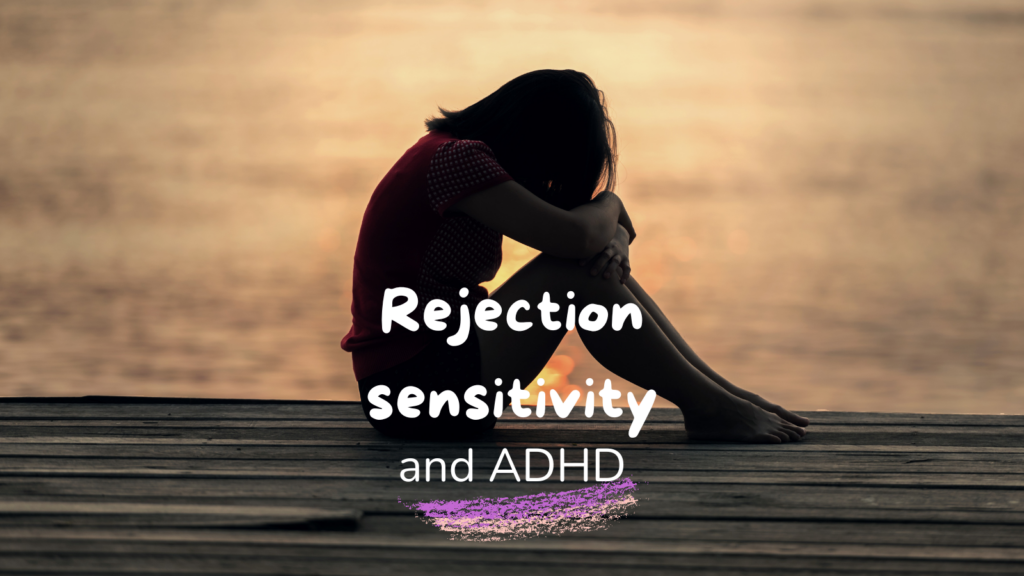
Rejection can hit hard – especially with ADHD. If even small criticism feels overwhelming, you’re not alone. Learn why rejection sensitivity happens and how to navigate it.
“They hate me. I knew it.”
Sophie stared at her phone, re-reading the last message from her friend.
📱“Sorry, I can’t make it today. Let’s reschedule!”
No emoji. No explanation. Just a short, blunt text.
Her stomach tightened. Her mind spun up a storm.
💭 Did I say something wrong? Is she mad at me? Maybe she’s just being polite, but actually avoiding me…
Her brain latched onto the worst-case scenario and wouldn’t let go.
Her chest felt heavy. Heat rushed to her face. She wanted to fix it – maybe send a follow-up message, something casual, to check if everything was really okay.
But deep down, a familiar thought crept in.
💭 I must have done something wrong. Otherwise, why would I feel this way?
She didn’t have proof. Just a deep, unshakable feeling of rejection.
Why Does Rejection Feel So Painful When You Have ADHD?
If you’ve ever felt like Sophie, you’re not alone. One unanswered message, one offhand comment, and suddenly, your brain spirals into self-doubt. It’s not just overthinking – it’s something deeper.
This can be Rejection Sensitivity Dysphoria (RSD) – an intense emotional response to perceived or actual rejection, criticism, or judgment. For people with ADHD, these feelings can be overwhelming, sometimes even physically painful. A simple “not today” text can feel like “I don’t want you in my life anymore.”
Although RSD isn’t an official diagnostic criterion for ADHD, it is widely recognized by clinicians as a core struggle in the ADHD experience.
How Does Rejection Sensitivity Manifest?
People with ADHD who experience RSD may find themselves:
- Feeling deeply hurt by even minor criticism
- Struggling with low self-worth and harsh self-criticism
- Constantly analyzing social interactions for signs of rejection
- Experiencing mood shifts based on how others treat them
- Seeking approval at the cost of personal boundaries
- Feeling ashamed over small mistakes and striving for perfection
It’s not just about being “too sensitive.” The ADHD brain is wired in a way that makes these reactions feel extreme and all-consuming.
Rejection Sensitivity & ADHD: Why It Feels So Intense
🧠 Emotional hypersensitivity – The ADHD brain struggles with emotional regulation, so even small rejections can feel huge.
🔋 Dopamine system dysfunction – ADHD brains often crave external validation because they process rewards differently. Approval from others can be a strong motivator – but its absence can feel like failure.
⏳ Past negative experiences – Many ADHDers grow up with frequent criticism, being told to “try harder” or that they’re “too much.” This reinforces a deep fear of rejection.
🎯Selective attention – The ADHD brain tends to hyperfocus on specific cues, sometimes misinterpreting a minor shift in tone or facial expression as a sign of rejection. Even subtle criticism can capture your full attention, triggering a spiral of overanalysis.
💾 Memory biases – People with ADHD tend to recall negative experiences more vividly while struggling to hold onto positive ones, making rejection feel like an undeniable pattern.
⚡ Impulsivity in reactions – The ADHD brain processes information quickly, but not always accurately. This can lead to snap judgments – assuming rejection before all the facts are in.
How to Deal with Rejection with ADHD
If you relate to these experiences, the good news is: RSD is manageable. With awareness and practice, you can shift how you respond to rejection-sensitive moments.
✅ Acknowledge your emotions – Instead of pushing the feelings away, recognize them: “I’m feeling rejected, and that’s painful. I wonder if there’s another way to look at this situation.”
✅ Challenge your first interpretation – When your brain jumps to “They don’t like me,” ask yourself:
- What else could this mean?
- Do I have actual proof that I was rejected?
- Could they just be busy, distracted, or tired?
Try listing 3 alternative explanations before assuming the worst.
✅ Take care of your physical state – Poor sleep, hunger, and stress make emotional regulation harder. Exercise, nutrition, and rest play a key role in coping with RSD.
✅ Interrupt negative thought spirals – If your mind is stuck analyzing what someone said, physically shift your focus:
- Move around
- Change your environment
- Engage in an activity that requires focus (counting, reading aloud, sudoku)
- Do a 5-4-3-2-1 grounding exercise: name 5 things you see, 4 you hear, 3 you can touch, 2 you smell, 1 you taste.
✅ Keep track of positive interactions – ADHD brains often filter out good experiences. Keep a journal of compliments, kind gestures, and supportive moments to counteract negative thought loops.
✅ Strengthen self-validation – The more you build your own sense of worth, the less external validation controls your mood. Ask yourself:
- What do I value in myself?
- What am I proud of?
- When have I handled challenges well?
Navigating Rejection with Self-Compassion
RSD can make small moments feel overwhelming, as if they cut deeper than they should. But understanding why this happens – and equipping yourself with the right strategies, can help you take back control.
If this resonates with you, know that you’re not alone. Your emotions are valid!
And if there’s one thing to take away from this, let it be this:
Rejection doesn’t define you. Your ADHD brain might magnify these feelings, but you have the power to reshape your response and build resilience.
Want more insights like this? Join my ⮕ newsletter ⬅ where I share relatable ADHD experiences and practical strategies – you might just find something that truly resonates with you!